
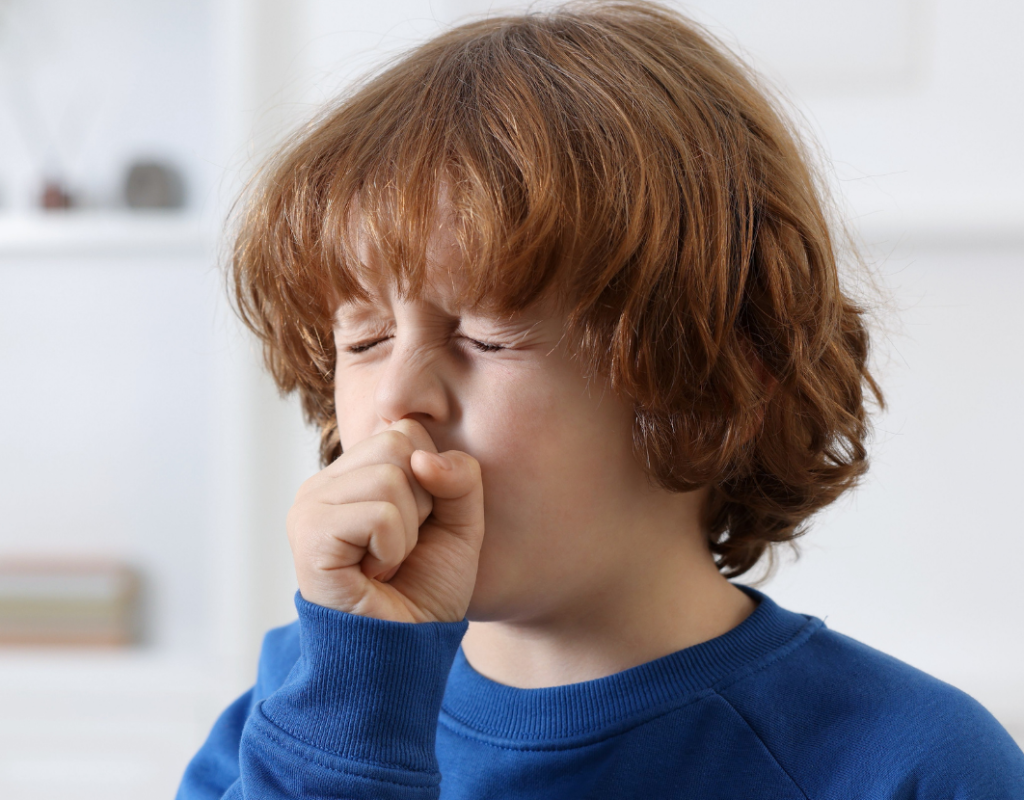
Few sounds get a parent’s attention quite like a child coughing in the middle of the night. Whether it’s a persistent, dry cough, a junky wet cough, or an unfamiliar barking sound, it’s natural to wonder what’s causing it and whether you should be concerned.
Different coughs can offer clues about respiratory illnesses, but the sound of a cough alone cannot always identify an illness or determine its severity. This guide is intended to help parents better understand common symptoms, not to diagnose conditions at home.
Most importantly, how your child is breathing matters more than how their cough sounds.
First, Pay Attention to Your Child’s Breathing
Coughing is a natural reflex that helps clear mucus and irritants from the respiratory system. While coughing can sound alarming, a child’s breathing, behavior and overall condition are often more important indicators of whether medical attention is needed.
Signs of troubled breathing may include:
- Rapid breathing: Breathing noticeably faster than usual, even while resting.
- Retractions: The skin between or beneath the ribs, or around the collarbone, pulls inward with each breath.
- Nasal flaring: The nostrils widen with each breath, particularly in infants and young children.
- Unusual breathing sounds: Wheezing, stridor or grunting may indicate difficulty moving air.
- Difficulty speaking or feeding: A child struggles to catch their breath long enough to speak, cry, drink or feed normally.
- Changes in color or alertness: Blue or gray lips, unusual lethargy or difficulty staying awake are serious warning signs.
Severe difficulty breathing, blue or gray lips, or pauses in breathing require emergency medical attention. Call 911 immediately. Retractions or significant breathing difficulty also warrant emergency evaluation. New wheezing, stridor or unusually fast breathing should be evaluated promptly.
Understanding Different Types of Childhood Coughs
Although many respiratory illnesses share similar symptoms, certain cough patterns may help your pediatrician understand what your child is experiencing. Here’s what parents should know about some common conditions.
Barking Cough: Croup
Croup is a respiratory illness that causes swelling around the voice box and windpipe. It is often recognized by a distinctive, harsh cough that sounds similar to a barking seal.
Children with croup may also develop a hoarse voice, runny nose or fever. Symptoms frequently become more noticeable at night.
Some children experience stridor, a high-pitched sound when breathing in. Unlike the barking cough, stridor is a breathing sound that may indicate narrowing of the upper airway. Stridor, especially when it occurs while a child is resting, requires immediate medical evaluation.
Listen to stridor
Learn more about croup from the AAP.
Dry, Recurring Cough: Asthma
Asthma causes inflammation and narrowing of the airways, which can lead to coughing, wheezing, chest tightness and shortness of breath.
Children with asthma may experience a persistent or recurring cough, particularly at night, during exercise or when exposed to environmental triggers.
Wheezing is a high-pitched whistling sound, most commonly heard when breathing out. However, not all children with asthma wheeze, and wheezing can also occur with other respiratory illnesses.
Listen to wheezing
If your child frequently coughs during physical activity, wakes at night because of coughing or experiences repeated episodes of wheezing, talk with your pediatrician.
Cough With Congestion or Wheezing: RSV
Respiratory syncytial virus (RSV) is a common virus that typically begins with symptoms resembling a cold, including a runny nose, congestion and coughing.
For many children, RSV causes relatively mild illness. However, infants and young children are at greater risk of developing bronchiolitis, an infection that affects the small airways in the lungs.
Symptoms may include wheezing, rapid breathing, retractions, lethargy, decreased appetite or difficulty feeding. Some infants may also experience pauses in breathing.
RSV does not have one characteristic cough sound. Parents should pay particular attention to their child’s breathing, hydration and ability to feed, rather than trying to identify the virus by the cough alone.
A Note on Protecting Young Children Against RSV
As respiratory illness season approaches, prevention is especially important for our youngest patients.
RSV is one of the leading causes of hospitalization among infants. Fortunately, immunizations are available that significantly reduce the risk of severe RSV illness.
Infants may receive protection through maternal RSV vaccination during pregnancy or through a long-acting preventive antibody administered directly to the baby. Most infants do not need both.
The American Academy of Pediatrics recommends RSV immunization for eligible infants younger than eight months entering their first RSV season, as well as certain high-risk children ages 8 through 19 months entering their second season.
While RSV immunization cannot guarantee that a child will avoid infection, it can significantly reduce the likelihood of severe illness and hospitalization. An immunized child may still develop RSV symptoms, but protection can help lessen the risk of serious complications.
Our pediatricians can help determine whether your child is eligible for RSV immunization and answer questions about protecting your family during respiratory illness season.
Visit our RSV information page
Read the AAP’s 2026–2027 RSV immunization recommendations
Wet or Dry Cough: The Common Cold
Most childhood coughs are caused by ordinary viral respiratory infections.
A cold may produce a dry or mucus-filled cough accompanied by sneezing, nasal congestion, sore throat or fever. Coughing often becomes more noticeable at night, particularly when mucus drains down the back of the throat.
It’s also common for coughing to continue after other cold symptoms have improved.
However, a cough that progressively worsens, persists for several weeks or is accompanied by breathing difficulties should be evaluated by your pediatrician.
Persistent Cough With Fever: Pneumonia
Pneumonia is an infection of the lungs that can be caused by viruses or bacteria.
Children with pneumonia may experience a persistent cough along with fever, fatigue, decreased appetite, chest discomfort or rapid breathing.
Unlike croup, pneumonia does not produce a distinctive cough that parents can reliably recognize. Some children may have a wet cough, while others have a dry cough.
A pediatric examination is important to determine whether pneumonia or another respiratory illness may be responsible for your child’s symptoms.
Intense Coughing Fits: Whooping Cough
Whooping cough, also known as pertussis, is a highly contagious bacterial respiratory infection.
It can cause repeated, forceful coughing episodes that make it difficult to catch a breath. Some children produce a characteristic high-pitched “whoop” when inhaling after a coughing fit. Vomiting after coughing may also occur.
However, not everyone with pertussis develops the recognizable whooping sound. Young infants may have little or no cough and instead experience dangerous pauses in breathing.
Because pertussis can be particularly serious in infants, suspected cases require prompt medical evaluation.
A Note About Respiratory Sounds
The recordings provided above are intended to help parents become familiar with sounds that may accompany respiratory illnesses. They are not diagnostic tools.
Wheezing and stridor are breathing sounds rather than types of coughs, and neither sound identifies a specific illness on its own. Your pediatrician will consider your child’s symptoms, breathing, medical history and physical examination when determining the appropriate care.
Never delay medical attention to compare your child’s breathing or coughing to an audio recording.
When Should You Call Your Pediatrician?
While many childhood coughs resolve without complications, certain symptoms deserve additional attention.
Contact your pediatrician if your child:
- Has a cough that is becoming worse rather than improving.
- Experiences a fever lasting more than three days or a fever that returns after improving.
- Has repeated coughing episodes that interfere with sleep, eating or normal activities.
- Frequently coughs during exercise or wakes at night coughing.
- Has a cough that persists for more than three weeks.
- Shows signs of dehydration or has difficulty drinking enough fluids.
Seek prompt medical attention for new wheezing, stridor, unusually fast breathing or any breathing difficulty.
Infants younger than three months with a temperature of 100.4°F (38°C) or higher also require immediate medical guidance.
If your child is struggling to breathe, has retractions, develops blue or gray lips, or is difficult to wake, seek emergency care immediately.
When in Doubt, Trust Your Pediatrician
Understanding different cough patterns can help you recognize changes in your child’s health and better communicate symptoms to your pediatrician. However, a cough’s sound should never be used to diagnose an illness or determine whether medical care is necessary.
A loud, persistent cough may accompany a relatively mild infection, while a child with a more serious respiratory illness may have only a subtle cough.
Pay attention to how comfortably your child is breathing, whether they are drinking and behaving normally, and whether their condition is improving or worsening.
At South Riding Pediatrics and Farrell Pediatrics, your child’s health and well-being are always our priority. Our board-certified pediatricians are here to help you navigate childhood illnesses with confidence. If you ever have questions or concerns about your child’s cough or breathing, don’t hesitate to reach out to our office.