

As the school year wraps up, many families are shifting into a completely different rhythm. Summer brings exciting changes — camps, vacations, sports, later bedtimes, more time outdoors, and often, a lot more time at home together.
While summer is meant to feel more relaxed, a little planning can go a long way in helping children stay healthy, active, rested, and emotionally balanced throughout the break.
Here are a few ways to help your family head into summer feeling prepared:
1. Check in on your child’s health before summer begins
Summer schedules tend to fill quickly. Before camps, travel, and sports get underway, now is a great time to:
- Schedule annual well visits
- Complete sports physicals
- Refill medications
- Catch up on vaccinations
- Submit required camp or school forms
Many summer programs require completed medical paperwork, and appointment availability can become more limited later in the season. Now is the time to book.
2. Keep some structure in place
Summer routines naturally look different, and that’s okay. But children of all ages still benefit from some consistency and predictability.
Even flexible routines around:
- Sleep
- Meals
- Outdoor time
- Physical activity
- Quiet time
- Screens
can help children feel more regulated and rested during the summer months.
You do not need to schedule every moment of the day. In fact, downtime is healthy and important. The goal is balance, not perfection.
3. Be intentional about screen time
Without the structure of school, screen time can easily expand during the summer. Rather than focusing only on limits, it can help to think about creating healthy habits around devices.
Some ideas include:
- Creating screen-free parts of the day
- Encouraging outdoor play before screens
- Keeping devices out of bedrooms overnight
- Planning family activities that don’t involve technology
- Allowing space for boredom and independent play
Children do not need constant entertainment. Boredom can actually support creativity, problem-solving, and imagination.
If you are looking for additional ways to help children stay mentally engaged during the break, we also shared ideas in our previous blog, Keeping Your Kids Sharp and Healthy This Summer: Tips to Prevent the Summer Slide.
4. Prepare for sports and outdoor activities
Summer activities often mean more heat, sun exposure, and physical exertion.
Help keep children safe by:
- Encouraging hydration throughout the day
- Taking breaks in shaded or cool areas
- Applying and reapplying sunscreen
- Wearing helmets and protective gear when appropriate
- Gradually increasing activity levels after a less active school year
Heat-related illness can happen quickly, especially during high temperatures and humid Virginia afternoons. Remind children to listen to their bodies and speak up if they feel dizzy, nauseated, overly tired, or unwell.
5. Think ahead for summer travel
Whether your family is heading out on a big vacation or planning smaller weekend trips, a little preparation can make travel easier for everyone.
Helpful items to keep on hand may include:
- Prescription medications
- Basic over-the-counter medications (ibuprofen, acetaminophen, cetirizine, etc)
- Sunscreen and insect repellent
- Water bottles and snacks
- A basic first aid kit
- Comfort items for younger children
For younger kids especially, maintaining familiar sleep and meal routines when possible can help reduce stress and make transitions smoother.
6. Keep learning part of everyday life
Learning continues long after the school year ends, and it does not need to happen through worksheets or formal lessons.
Reading together, visiting the library, cooking, gardening, exploring nature, playing games, helping with grocery lists, and having conversations all support learning and development in meaningful ways.
Small, everyday experiences often teach children more than we realize.
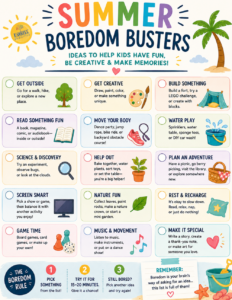
Download Our Summer Boredom Busters Printable
Need a little inspiration for long summer afternoons?
We created a free Summer Boredom Busters printable filled with simple, low-stress activity ideas to help keep kids engaged, creative, active, and less dependent on screens.
You can print it out, hang it on the refrigerator, and let kids choose activities throughout the summer whenever boredom strikes.
Looking for More Summer Safety Resources?
This guide focuses on helping families prepare for the rhythm and routines of summer, but we also encourage parents to explore our additional seasonal safety resources.
For older children and families, our comprehensive summer safety guide includes information on:
- Water safety
- Sun protection
- Tick and insect bite prevention
- Helmet and bike safety
- Heat safety
- Travel tips
- Outdoor play safety
Read it here: Your Ultimate Guide to Summer Safety: Tips for Happy, Healthy Kids All Season Long
For families with babies and younger infants, we also recommend reviewing our infant summer safety resource, which covers topics like overheating, sun exposure, hydration, safe sleep, stroller safety, and more:
A Guide to Infant Summer Safety
Final Thoughts
Summer does not have to be perfectly planned to be successful.
Some of the most meaningful moments come from ordinary things — backyard play, popsicles on the porch, family dinners, trips to the pool, library visits, neighborhood walks, and slower mornings together.
We hope your family has a healthy, safe, and memorable summer.